
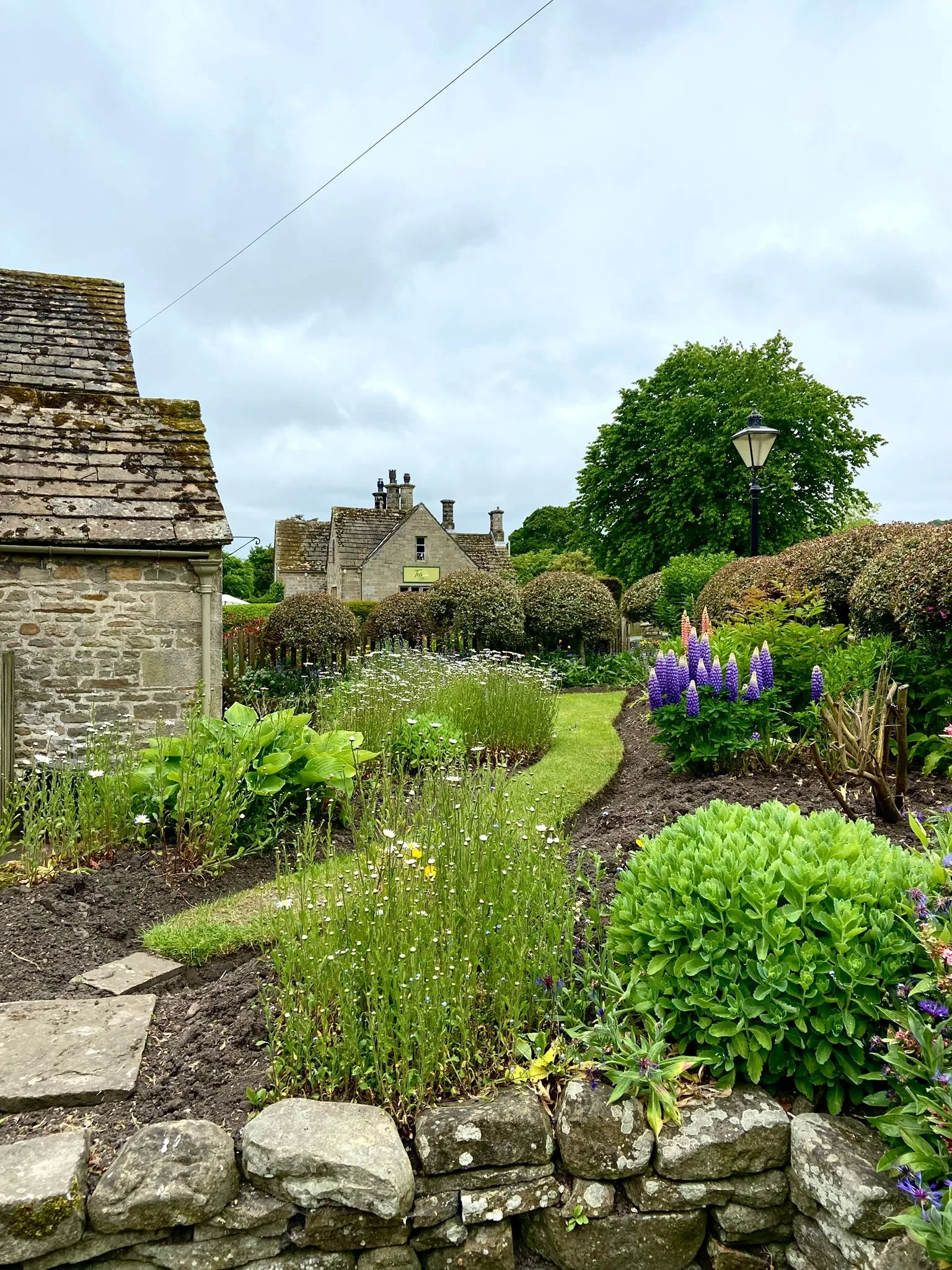
Some day trips are about scenery, others about shopping or a famous landmark. Saltaire and Haworth are about story — two small West Yorkshire places where history feels close enough to touch, and where international students can step directly into the Victorian age and the world of one of English literature's most famous families. Both are easy to reach from Leeds, both are rich in the kind of culture that brings language learning alive, and together they make a wonderful pair of cultural excursions.
In short: Saltaire is a remarkably preserved Victorian model village near Bradford and a UNESCO World Heritage Site, built around the great Salts Mill, now home to art, shops and cafés. Haworth is a hilltop village on the edge of the moors, famous worldwide as the home of the Brontë sisters — Charlotte, Emily and Anne — who wrote Jane Eyre and Wuthering Heights there. Both are short trips from Leeds and offer history, literature and beautiful Yorkshire landscapes.
Here is how to explore them, and why they are so rewarding for students.
Saltaire: a Victorian world preserved
Saltaire is one of Yorkshire's quiet treasures, and its story is genuinely fascinating. In the nineteenth century, a wealthy industrialist named Sir Titus Salt built an entire model village around his textile mill — not just a factory, but neat stone houses for his workers, along with a school, a hospital, almshouses, a church and a park. It was a remarkably progressive vision of industrial life for its time, and the village survives so completely intact that, in 2001, it was designated a UNESCO World Heritage Site, recognising its global cultural importance.
Walking Saltaire's tidy Victorian streets is like stepping back in time. The centrepiece is Salts Mill, the vast former textile mill, now beautifully repurposed into a cultural space housing art galleries (including a major collection of works by the Bradford-born artist David Hockney), bookshops, design stores and cafés. You can wander the village, stroll along the Leeds–Liverpool Canal that runs through it, relax in Roberts Park, and admire the grand Italianate architecture. It is a peaceful, elegant and genuinely interesting place to spend a few hours.
Getting there: Saltaire has its own railway station, and direct trains from Leeds take around 20 minutes, making it one of the quickest and easiest cultural trips from the city.
For your English: Saltaire combines easy exploration with rich history, giving you reading practice (the information boards and museum displays), vocabulary (industrial and architectural terms), and relaxed conversation in the cafés and galleries. The World Heritage story is also a memorable piece of British history to learn and talk about.
Haworth and the Brontës: literature on the moors
If Saltaire is about industry, Haworth is about imagination. This small, steep hilltop village on the edge of the wild Pennine moors is famous across the world for one reason: it was the home of the Brontë sisters, three of the most celebrated writers in the English language. Living in the village parsonage in the 1800s, Charlotte, Emily and Anne Brontë wrote novels that are now classics studied everywhere — Charlotte's Jane Eyre, Emily's Wuthering Heights, and Anne's The Tenant of Wildfell Hall among them.
Haworth lets you walk straight into their world. The Brontë Parsonage Museum, the family's former home, is preserved as a museum filled with their furniture, belongings and manuscripts, offering a moving and intimate glimpse into the lives behind the books. The village's cobbled Main Street, lined with traditional shops, tea rooms and pubs, climbs steeply and feels barely changed in over a century. And beyond the village stretch the moors themselves — the brooding, beautiful landscape that inspired Wuthering Heights and that you can walk out into for a real sense of the wild Yorkshire that shaped the sisters' imagination.
Getting there: Haworth is a little further than Saltaire and slightly less direct — typically reached by train towards Keighley and then a connecting bus, or the heritage Keighley & Worth Valley Railway, a charming preserved steam line that is an attraction in itself. Allow a bit more travel time, and the journey becomes part of the adventure.
For your English (and your reading): Haworth is a gift for language learners with an interest in literature. Visiting the home of writers whose work you may study makes English literature tangible and exciting, and the museum offers rich reading and vocabulary. Even if you have not read the Brontës, the village and moors are atmospheric and beautiful, and learning their story is a wonderful cultural deep-dive. For students of English, standing where Jane Eyre was written is an unforgettable connection between the language they are learning and the culture that produced it.
Why these trips matter for learning
It would be easy to file Saltaire and Haworth under "sightseeing", but they offer something more valuable to a language learner: cultural depth. Language and culture are inseparable, and experiencing British history and literature first-hand enriches your understanding of English in a way no classroom can. The vocabulary of industry and architecture in Saltaire, the literary heritage of Haworth, the Victorian story running through both — all of it builds the cultural knowledge that underpins real fluency and gives you fascinating things to read, learn and talk about.
As with any excursion, the practical English practice flows naturally too: planning the trip, navigating the trains, buying tickets, ordering in a tea room, reading museum displays, and — best of all — discussing what you have seen with friends from other countries. Because the experiences are vivid and memorable, the language attached to them sticks. A day spent in a World Heritage village or a literary shrine is a day of immersion disguised as an adventure.
This is exactly why cultural excursions are such a valued part of student life. At Yorkshire College, getting out to explore the history and landscapes of Yorkshire is part of how students practise English and deepen their understanding of British culture beyond the classroom — with the ease and friendship of going as a group. Saltaire and Haworth are two of the most rewarding such trips on the city's doorstep.
Practical tips
- Saltaire is the easy one; Haworth is the adventure. If you want a quick, simple cultural trip, start with Saltaire (about 20 minutes by direct train). For Haworth, plan the route in advance and allow more time for the connecting journey.
- Wear comfortable shoes. Both villages, especially Haworth's steep Main Street and the moors, involve walking on hills and cobbles.
- Check opening times. Confirm the opening hours of Salts Mill galleries and the Brontë Parsonage Museum before you go.
- Dress for the weather, particularly at Haworth, where the moors can be windy and cool even when Leeds is mild. Bring a waterproof.
- Read a little first (optional but rewarding). Knowing the basic Brontë story, or even reading a few pages of Jane Eyre or Wuthering Heights, makes Haworth come alive — and is excellent reading practice.
- Use a Railcard. A 16–25 or 26–30 Railcard takes a third off the fares for eligible students.
Frequently asked questions
What is Saltaire and why is it famous? Saltaire is a remarkably preserved Victorian model village near Bradford in West Yorkshire, built by industrialist Sir Titus Salt around his textile mill, with houses, a school, a hospital, a church and a park for his workers. It is a UNESCO World Heritage Site, and its centrepiece, Salts Mill, now houses art galleries, shops and cafés.
Why is Haworth famous? Haworth is a hilltop village on the edge of the Yorkshire moors, world-famous as the home of the Brontë sisters — Charlotte, Emily and Anne — who wrote classic novels including Jane Eyre and Wuthering Heights there in the 1800s. You can visit their former home, the Brontë Parsonage Museum, and walk the moors that inspired their work.
How do I get to Saltaire from Leeds? Saltaire has its own railway station, and direct trains from Leeds take around 20 minutes, making it one of the quickest cultural day trips from the city. A Railcard reduces the fare for eligible students.
How do I get to Haworth from Leeds? Haworth is usually reached by train towards Keighley and then a connecting bus, or via the heritage Keighley & Worth Valley Railway, a preserved steam line. It takes a little longer than Saltaire, so plan the route in advance and allow extra travel time.
Are Saltaire and Haworth good for international students? Yes. Both offer rich British history and culture, beautiful Yorkshire scenery, and plenty of real-world English practice — from reading museum displays to chatting in tea rooms. Haworth is especially rewarding for students interested in English literature, as it brings classic novels vividly to life.
Step into Yorkshire's history while you practise English. See student activities and excursions at Yorkshire College or request a quote.